

Waking up to a disabled ad account is one of the most disruptive things that can happen to a UK e-commerce brand. Revenue stops. Campaigns go dark. And the clock starts ticking on every pound of daily spend you are no longer capturing. If you have ever searched "facebook ad account disabled" in a panic, you already know how little useful guidance exists on what to do next.
Most advertisers instinctively head straight for the appeals queue, assuming a quick submission will resolve things within hours. It rarely does. Meta provides no published timeframe for reinstatement, no dedicated support channel, and no real transparency on why accounts are disabled in the first place.
This post reframes the problem entirely. Rather than focusing on how to appeal faster, it focuses on how to build the kind of account infrastructure that means a single disablement never costs you a day of campaign spend again. You will learn how account-level disablements differ from ad rejections, why appeals are an unreliable recovery strategy, and how a pre-approved agency backup account keeps your campaigns running regardless of what happens to your primary account.
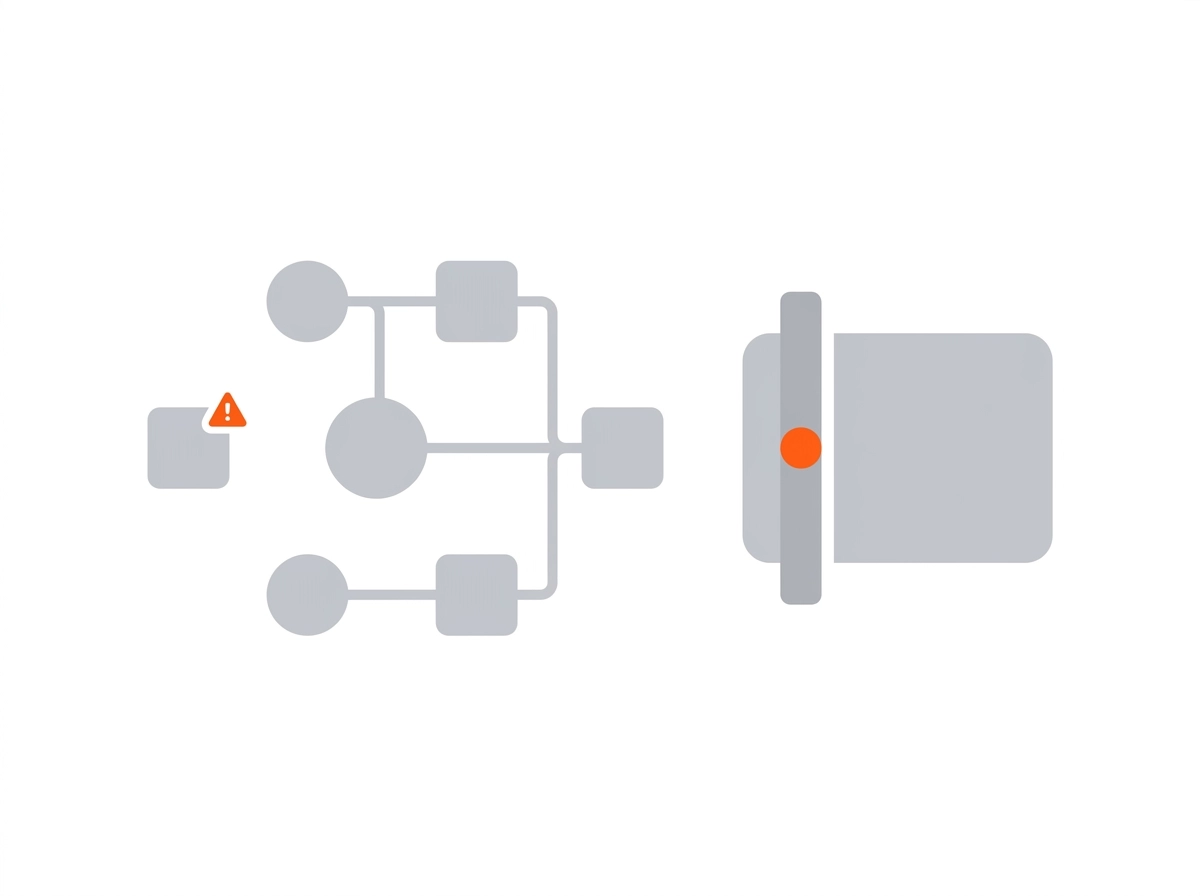
Most advertisers treat a rejected ad and a disabled account as the same kind of problem. They are not.
When a single ad is rejected, the platform flags that creative and leaves everything else running. Your other campaigns keep spending. Your audiences stay warm. Your account remains fully accessible.
An account-level disablement is a different situation entirely. The moment it happens, every active campaign stops. No impressions, no clicks, no spend. On Meta, you also lose access to the custom audiences, pixel data and campaign history tied to that account. You are not just paused on one ad; you have lost the entire account's operational history.
TikTok operates a similar all-or-nothing enforcement model at the account level, a single flag can freeze an entire media plan, though TikTok's official documentation on disablement mechanics is less detailed than Meta's.
The problem is that many advertisers spend time ensuring individual ads meet platform advertising standards, without realising the risk is building at the account level. Policy accumulation, payment anomalies, and behavioural signals are what cause account-level shutdowns, not a single non-compliant creative.
The financial impact starts immediately. A UK DTC brand spending hundreds to thousands of pounds per day does not lose that revenue from the moment an appeal is filed. It loses it from the moment the account goes down.
That distinction matters. It means the appeal queue is already too late.
So the account is down and you want to know why. The cause matters because it shapes how you respond and what you fix before the next account goes live.
Payment and billing flags are the most common trigger. A declined card, a billing address that does not exactly match your registered business details, or a sudden spike in daily spend can all push the account into automated review. Meta's fraud detection systems are sensitive to anything that looks like unusual payment behaviour, and a single declined transaction at the wrong moment is often enough.
Accumulated policy violations are the second major route to a full account-level disablement. Individual ad rejections rarely cause it on their own, but if the same Business Manager or pixel is connected to multiple flagged ads over time, the risk compounds. The platform is not just reviewing one ad; it is looking at the account's history as a whole.
Chargebacks and billing disputes are widely reported to leave a compliance record on the account, which may contribute to future reviews.
Login anomalies are frequently reported as silent triggers. These patterns appear regularly in community forum reports, though Meta does not publish them as official policy. Accessing Ads Manager through a shared office VPN that rotates IP addresses, for example, can register as suspicious account behaviour.
Advertisers report that unrecognised-device login prompts, if left unanswered, can escalate to full disablement, though Meta does not publish this as official policy.
On TikTok, the pattern is different but equally disruptive. Advertisers running new TikTok accounts commonly report that high initial spend triggers automatic flags, suggesting the platform treats rapid spend acceleration as a risk signal, though TikTok has not published the specific thresholds.
So you know what triggered the shutdown. The harder truth is that knowing the cause does not get your campaigns back online. That depends entirely on the appeal process, and the appeal process is not built around your revenue calendar.
Neither Meta nor TikTok publishes a service level agreement for reinstating a disabled ad account. There is no committed timeframe. An appeal can take anywhere from a day to several weeks, Meta publishes no committed timeframe, and you will receive no status updates in between. You are waiting with no visibility.
Most advertisers find themselves navigating community forums and generic submission forms, with no clear escalation path.
The outcomes are also inconsistent. Advertisers commonly report inconsistent outcomes for accounts disabled under the same stated policy reason. That is not a process you can plan around.
Even a successful appeal carries risk. Some advertisers report being re-disabled shortly after reinstatement, with no clearer explanation the second time. Reinstatement is not a clean resolution.
While the appeal waits, audiences go cold and the algorithm resets, meaning you return to a rebuild, not a resumption.
Filing an appeal is still the right step. But making it your primary recovery plan means accepting an open-ended downtime window as normal. For any e-commerce business with daily spend running, that is not acceptable.
The appeal queue problem is not the root cause. The root cause is that most advertisers have built their entire paid acquisition operation on a single account, which means a single automated flag takes everything offline at once.
That structure made sense five years ago, when enforcement was slower and a quick review often restored access within a day. In 2026, Meta has deployed more targeted automated enforcement systems using large language models to close policy gaps faster than any human review team could. The speed and unpredictability of that enforcement has increased.
For agencies, the risk compounds further. A documented pattern in 2025 suspensions shows that when one business owner account is flagged, connected Business Managers, ad accounts, and client assets cascade into suspension, even when those accounts had no violations of their own. One client's problem becomes every client's problem overnight.
The question to ask yourself is not whether your account will ever be flagged. Enforcement at scale produces false positives, billing anomalies surface unexpectedly, and policy interpretations shift. The real question is whether your business can absorb the revenue gap while the platform takes its time.
Operators who survive this well have stopped treating ad accounts like a single payment card they cannot afford to lose. They treat them the way any serious business treats payment infrastructure: with redundancy built in before it is needed, not sourced in a panic after the fact.
Here is the sequence that limits your downtime to minutes rather than days.
Step 1: File your appeal immediately and document everything. Screenshot the disabled account notice, the policy reason cited, and your full payment history. Do this before you do anything else. The paper trail matters whether the appeal succeeds or not.
Step 2: Activate a pre-approved backup account before you feel the revenue impact. A pre-approved backup account, already funded and connected to your pixel, can go live in minutes.
Step 3: Duplicate your last working campaign structure into the backup account. Export your best-performing ad sets and audiences now, before you need them. With a clean export ready, rebuilding takes under an hour. Without one, it can take most of a working day.
Step 4: Use a clean, dedicated payment card on the backup account. Never use the same billing details that were on the flagged account. A shared card connects the two accounts in the platform's automated systems and can trigger a second disablement almost immediately.
Step 5: Notify your team or client with a clear status update. Unplanned downtime without communication compounds the operational damage. A short message explaining the situation and your recovery timeline is faster to send than most people think, and it matters.
The order of steps two through five is deliberate: get spend running again first, then communicate, then let the appeal take whatever time it takes. Everything that happens before you have a live backup account is damage control. Having one ready before a disablement occurs is the only real fix.
Agency-managed accounts on Meta and TikTok are provisioned outside the standard self-serve signup flow. That means they typically carry established spend histories and start with higher initial limits than a freshly created personal account. When you need a replacement quickly, you are not starting from zero.
Delivery within 2 hours. AdBear typically delivers an account within 2 hours of a request. A UK advertiser who wakes up to a disabled account notice at 6am can have a live replacement before the business day starts. No waiting days for a manual approval process.
Near-instant top-ups. Balances are topped up through the AdBear platform without waiting for a bank transfer to clear. Campaigns can resume spending within minutes of switching accounts, not the following morning.
Your creative and data stay yours. AdBear owns the account layer only. Your campaigns, ad sets, audiences, pixel data and targeting logic remain in your own Ads Manager. Switching to a backup account does not change your workflow or hand anything over.
Real-time support on WhatsApp. If an account gets flagged or needs replacing, you contact a real operations team through a dedicated WhatsApp Business line. There is no ticket number, no auto-reply queue, and no waiting 48 hours for a response.
No annual contract. Terms are month-to-month. You can hold a backup account on standby and scale up or pause without a long-term commitment. It is infrastructure you pay for when you need it.
A backup account solves the downtime problem. These steps reduce the chances of needing it.
Use a dedicated payment card for each ad account. The billing name and address must exactly match the business details registered on the platform. Automated systems flag mismatches before a human ever looks at your account.
Keep login access tight. Limit Ads Manager to a small number of users on recognised devices. Avoid logging in through VPNs or shared office networks. Meta's account integrity policies flag activity that suggests multiple locations or identity inconsistencies.
Run a policy audit every quarter. Review your active creatives for claims that overstate results, imagery that sits close to policy boundaries, and landing pages that do not align with the ad. Individual ad violations accumulate into account-level risk through a strike system that escalates with each new flag.
Separate client accounts into their own Business Managers. One flagged account under a shared umbrella can draw scrutiny to everything connected to it. Isolation limits the damage.
Scale budgets gradually. A sudden large jump in daily spend on a young account reads as a fraud signal. Increase budgets in proportion to account age and payment history.
Keep documentation ready. Store payment receipts, business verification documents and any previous platform correspondence in one place. When an appeal is necessary, having these ready saves days.
Prevention steps reduce your exposure. They do not protect you when an automated system flags your account at 2am on a Saturday and your campaigns go dark.
That is the hard limit of a risk-reduction approach. A disabled Meta, Facebook or TikTok ad account stops all spend immediately. Every hour without a live backup account is revenue you cannot recover.
The sequence is simple: file the appeal, activate a pre-approved backup account, and rebuild campaign structure from a saved export, all covered in detail above.
Infrastructure redundancy is what closes the gap.
If you are running significant paid social budgets with no failover account in place, that is the conversation to have now, not after a shutdown. Visit adbear.co to speak directly with the team about what you need.
Account disablements are not edge cases. They are a predictable risk for any advertiser running consistent paid social spend on Meta or TikTok.
Every day you run without a failover account is a day you are one automated flag away from losing all paid social traffic.
The advertisers who recover fast are the ones who prepared before the problem hit. Do not let a disabled account be the event that forces the conversation.
Visit adbear.co today and speak with the team. Get the infrastructure in place before you need it.

.svg)